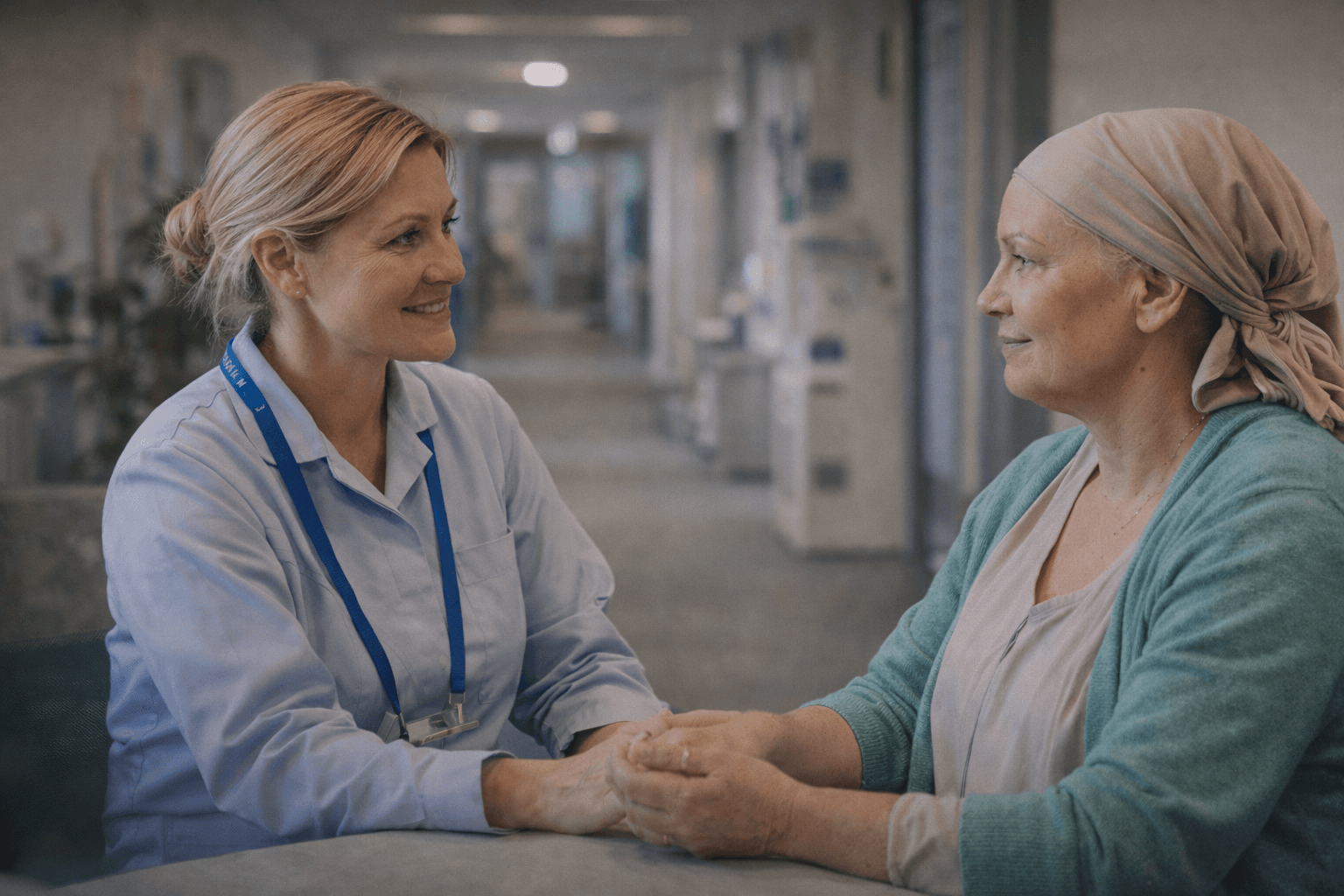
Guidance for patients
New cancer diagnosis and heart health
A practical overview of baseline heart checks, personalised risk assessment, and monitoring during treatment.
Being told you have cancer can feel overwhelming, and it is normal to have questions about how treatment might affect your heart. Cardio-oncology brings together expertise in both cancer and heart disease to support you before, during and after your treatment.
This page outlines the typical steps involved in assessing your heart health and creating a plan to monitor and protect it alongside your cancer care. It is intended as general information and does not replace advice from your own medical team.
Baseline cardiac assessment: step by step
Before or early in your cancer treatment, it can be helpful to record a clear baseline of how your heart is working. This allows any changes during treatment to be detected and managed as early as possible.
Referral for cardio-oncology opinion
Your oncologist, specialist nurse or GP can refer you for a cardio-oncology assessment. You can also self-refer. A baseline assessment helps ensure your cardiovascular health is considered alongside your cancer treatment plan.
Initial consultation with Dr Dobson
At your first appointment your cardiac history, cancer diagnosis and planned treatments will be reviewed. Your risk factors for cardiovascular disease will be assessed and treated to reduce your risk of heart problems as much as possible.
Baseline cardiac tests
You may require investigations such as an ECG, echocardiogram (heart ultrasound) and blood tests. These help assess your cardiovascular risk and establish how well your heart is working before cancer treatment starts.
Personalised risk assessment
Using your medical history and your test results, whilst also considering the specific cancer therapy you require, Dr Dobson assesses your individual risk of heart problems related to cancer treatment and discusses this with you.
Plan for monitoring during treatment
A tailored follow-up plan is agreed, which may include repeat scans or blood tests at specific stages of your cancer treatment to detect cardiotoxicity early.
Long-term follow-up
After treatment some patients benefit from long term monitoring of heart health. Dr Dobson will determine if this is required or not.
Talking about your individual situation
If you have a new cancer diagnosis and are worried about your heart health, you can discuss a referral to Dr Dobson with your oncology team, GP or private healthcare provider. For appointment enquiries, please use the contact details on the Get in touch page.